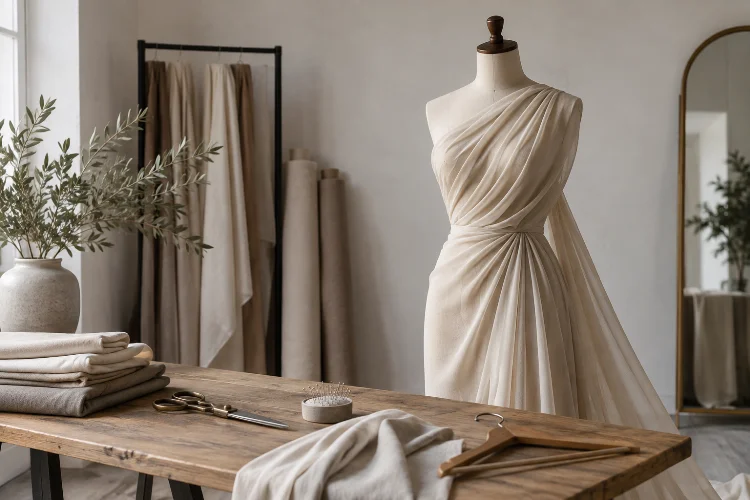
Fashion has its own language. Spend five minutes reading a runway review, browsing an online clothing store, or watching a stylist explain an outfit, and you may hear words like silhouette, drape, bespoke, inseam, and ready-to-wear.
Some of these terms sound technical, but most describe simple ideas that can make shopping, styling, and understanding clothes much easier.
Learning the essential fashion terms everyone should know is useful even if you have no plans to work in the fashion industry.
Knowing the right vocabulary can help you describe why a jacket fits beautifully, understand why two similar fabrics behave differently, or communicate exactly what you want when visiting a tailor.
It can also make fashion content far less confusing. This guide breaks down important clothing and style terminology in plain English.
Rather than memorizing dozens of complicated definitions, you will learn what the most useful terms mean, how they appear in everyday fashion, and why they matter when building your wardrobe.
1. Silhouette: The Overall Shape of an Outfit
One of the most common terms in fashion is silhouette. It refers to the overall outline or shape created by a garment when it is worn.
For example, an A-line dress is relatively narrow near the upper body or waist and gradually becomes wider toward the hem, creating a shape similar to the letter A. Other familiar silhouettes include straight, fitted, oversized, column, and mermaid shapes.
Silhouette matters because people often notice the overall shape of an outfit before they notice small details.
Imagine two black dresses made from similar fabric. One has a close-fitting bodycon silhouette, while the other has a loose A-line shape. Even though the color and material are similar, the outfits can create completely different impressions.
When styling clothes, think about how the shapes interact. Wide-leg trousers combined with an oversized jacket create a different visual balance from wide trousers paired with a fitted top.
2. Fit and Proportion: How Clothing Sits on the Body
Fit describes how closely a garment matches the dimensions and shape of the person wearing it.
Clothes may be described as slim-fit, relaxed-fit, oversized, cropped, straight-fit, or regular-fit. A good fit does not always mean tight clothing. It simply means the garment sits on the body in the way it was designed to.
Proportion, meanwhile, refers to the visual relationship between different parts of an outfit.
A cropped jacket worn with high-waisted trousers, for example, can make the lower half of the body appear longer. An extra-long coat paired with loose trousers creates a completely different proportion.
Understanding proportion is particularly useful when experimenting with trends. You do not necessarily need to follow strict rules. Instead, look at whether the lengths, volumes, and shapes of your clothing feel balanced together.
3. Tailoring, Hemlines, Seams, and Inseams
Tailoring is the process of making or altering clothing so it fits a person’s body more precisely. Tailoring may involve changing sleeve lengths, adjusting shoulders, shortening trousers, reshaping a waist, or modifying other parts of a garment.
Several other useful construction terms appear frequently when discussing fit.
A hemline is the finished lower edge of a garment, such as the bottom of a skirt, dress, shirt, or trouser leg.
A seam is where pieces of fabric are joined together. The inseam specifically refers to the seam running along the inner leg of trousers from the crotch toward the hem.
If you shop for jeans online, you may see waist and inseam measurements listed seperately. Knowing your inseam makes choosing the correct trouser length much easier.
You may also hear the word dart. A dart is a folded and stitched section of fabric used to create shape around areas such as the bust, waist, shoulders, or hips.
These small construction details can dramatically influence how polished a garment looks.
4. Necklines, Sleeves, and Other Garment Details
Fashion vocabulary becomes especially useful when describing specific garment features.
A neckline is the shape or edge around the neck and upper chest of a top or dress. Common versions include crew neck, V-neck, boat neck, square neck, halter, sweetheart, and off-the-shoulder styles.
Sleeves also come in many forms, including cap, bell, puff, raglan, bishop, and three-quarter sleeves. Fashion terminology often gives designers, retailers, and shoppers a faster way to describe these details.
Then there are embellishments, which are decorative elements added to clothing. Embroidery, beads, sequins, appliqué, studs, and decorative stitching can all be considered embellishments.
Knowing these words becomes especially helpful when searching online.
Instead of typing “black dress with wide sleeves and shiny decorations,” you could search for “black dress with bell sleeves and sequin embellishments.” The second description is far more specific.
The same principle works for accesories, jackets, trousers, and almost every other fashion category.
5. Fabric, Texture, and Drape
Fabric does more than determine whether clothing feels soft or rough. It also affects the way a garment moves, hangs, stretches, and keeps its shape.
Texture refers to the visual or physical surface quality of material. Velvet feels plush, denim feels relatively structured, satin appears smooth, while bouclé has a more irregular textured surface.
Another important term is drape.
In clothing, drape describes how fabric hangs or falls. A lightweight silk-like fabric may flow softly around the body, while thick denim tends to hold a more structured form. Merriam-Webster describes drape in clothing as its cut or hang.
This explains why two dresses with the same pattern can look surprisingly different when made from different fabrics.
Fabric weight also matters. Lightweight materials usually move more freely, while heavyweight fabrics often create greater structure.
Once you become familar with these concepts, judging clothing from online photographs becomes easier because you can pay attention to how the fabric falls rather than looking only at color.
6. Haute Couture, Ready-to-Wear, and Bespoke
Some fashion terms describe how clothing is produced rather than how it looks.
Ready-to-wear, also called prêt-à-porter, refers to garments produced in standardized sizes and sold as finished clothing. Most clothes found in conventional retail stores belong to this category.
Haute couture sits at the other end of the spectrum. The term is associated with exceptionally high-level fashion craftsmanship, extensive handwork, luxury materials, and garments created with a strong emphasis on individual construction and design.
In everyday conversation, people sometimes use “couture” to mean anything luxurious. Within the professional fashion world, however, haute couture has a much more specific meaning.
Another useful word is bespoke. Bespoke clothing is made specifically for an individual customer rather than produced in standard sizes.
You may also encounter made-to-measure. It generally begins with an existing pattern that is adjusted to the customer’s measurements, while fully bespoke clothing can involve creating a more individualized pattern and construction.
Understanding these distinctions makes luxury fashion terminology considerably less mysterious.
7. Capsule Wardrobe, Basics, and Statement Pieces
Not all important fashion language comes from garment construction.
A wardrobe basic or staple is a versatile piece that can work with many outfits. Depending on someone’s lifestyle, staples might include simple T-shirts, neutral trousers, denim, white sneakers, knitwear, or a classic jacket.
A capsule wardrobe takes that idea further. It usually refers to a relatively small collection of versatile clothes designed to mix and match easily.
The goal is not necessarily to own as few clothes as possible. Instead, it is about creating a wardrobe in which individual pieces work together effectively.
At the opposite end is a statement piece—an item designed to attract attention. It might be a bold coat, unusual handbag, patterned pair of trousers, or dramatic jewellery.
An outfit can definately include both basics and statement pieces. In fact, a simple neutral base often makes a distinctive item stand out even more.
8. Trend, Style, and Aesthetic Are Not the Same Thing
These three words are often treated as interchangeable, but they describe different ideas.
A trend is a style, product, color, silhouette, or styling approach that becomes popular during a particular period. Trends can spread through runways, celebrities, social platforms, street style, retail, and cultural movements.
Personal style is broader and usually more individual. It describes the clothing choices, preferences, and visual habits that consistently represent a person.
An aesthetic is a recognizable visual theme or overall look. Examples might include minimalist, preppy, romantic, streetwear, vintage-inspired, or utilitarian aesthetics.
Trends change quickly, while personal style can remain relatively consistent for years.
This is why someone can incorporate a current trend without rebuilding their entire wardrobe. They might simply choose one trendy silhouette or accessory that still fits their existing style.
Fashion vocabulary itself also evolves as culture and technology change, which is why modern industry glossaries regularly add new expressions and concepts.
9. Sustainable and Circular Fashion
As conversations around clothing production have expanded, sustainability terminology has become increasingly common.
Sustainable fashion broadly refers to efforts to reduce environmental and social harm throughout the clothing lifecycle, including materials, manufacturing, transportation, use, and disposal.
Circular fashion focuses on keeping products and materials in use rather than following a simple make-use-discard system.
This can involve repairing clothes, resale, reuse, recycling, designing products for longer life, and developing systems where materials can eventually return to production.
CFDA sustainability guidance describes circularity as an approach involving continued material loops through practices such as reuse, refurbishing, and recycling.
You may also hear terms such as upcycling, where an existing item or material is transformed into something with renewed value, and deadstock, which commonly refers to unused surplus fabric or inventory.
Understanding these terms can make sustainability claims easier to evaluate instead of relying only on attractive marketing language.
Learning fashion vocabulary does not mean memorizing every technical word used by designers. Start with practical concepts such as silhouette, fit, proportion, tailoring, drape, ready-to-wear, and capsule wardrobe.
Once you understand those basics, clothing descriptions and styling advice become much easier to interpret. You can shop more precisely, communicate better with tailors, compare garments more intelligently, and explain what you actually like about an outfit.
Most importantly, fashion terms give you a language for understanding your own style.
The next time you browse your wardrobe or shop for something new, look beyond color and size. Notice the silhouette, fabric, proportion, construction, and drape.
The more details you recognize, the easier it becomes to choose clothes intentionally rather than simply following whatever happens to be trending.