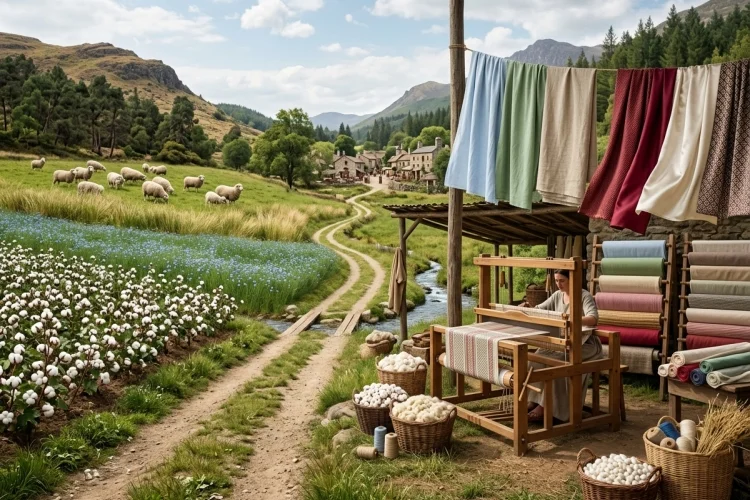
Have you ever picked up two similar-looking shirts and wondered why one feels soft and breathable while the other feels stiff or unusually warm? The answer is usually hidden in the fabric.
Understanding materials can make a huge difference when buying clothes. Fabric affects how a garment looks, moves, stretches, feels against your skin, and survives repeated washing.
It can also determine whether an outfit works well in hot weather, cold temperatures, formal settings, or everyday activities. Unfortunately, clothing labels can feel like a different language.
Terms such as cotton blend, viscose, elastane, twill, jersey, and satin may appear without explaining what they mean. This beginner’s guide to fabrics and textiles breaks down the essential ideas in a simple way.
You will learn the difference between fibres and fabrics, explore common natural and manufactured materials, understand woven and knitted construction, and discover how to evaluate clothing before buying it.
What Is the Difference Between Fibres, Fabrics, and Textiles?
A fibre is the smallest basic material used to make a textile. Fibres can come from plants, animals, regenerated plant-based substances, or manufactured polymers.
Cotton, wool, silk, polyester, and nylon are all examples of fibres. These fibres are usually spun or combined to create yarn, which can then be woven, knitted, felted, or processed in another way to make fabric.
The word textile is a broad term covering materials produced through techniques such as weaving, knitting, felting, printing, embroidery, and lace-making. The Victoria and Albert Museum’s textile collection contains examples representing almost every major textile technique.
Fabric usually refers to the flexible sheet of material used to create clothing, furnishings, and other products. The FTC defines fabric broadly as material that is woven, knitted, felted, or otherwise produced from natural or manufactured fibres and yarns.
Understanding Natural Plant Fibres
Plant fibres come from parts of plants such as seeds, stems, or leaves. Cotton, linen, and hemp are some of the best-known examples.
1. Cotton
Cotton is commonly used for T-shirts, underwear, jeans, shirts, towels, and bedding. It generally feels soft and can absorb moisture, although the final performance depends on the weave, weight, finish, and whether it is blended with other fibres.
A lightweight cotton voile feels very different from thick cotton denim. This shows why the fibre name alone cannot tell you everything about a garment.
Cotton may shrink, wrinkle, or lose shape depending on how the fabric was made and treated. Always check the care label rather than assuming every cotton item can be washed in exactly the same way.
2. Linen and Hemp
Linen is made from flax and is popular for warm-weather shirts, trousers, dresses, and jackets. It usually has a crisp texture and wrinkles easily, which many people consider part of its relaxed appearance.
Hemp can produce strong, durable textiles and is sometimes blended with cotton to create a softer feel. Both linen and hemp fabrics can vary significantly depending on yarn quality, construction, and finishing.
Exploring Animal-Based Fibres
Animal fibres include wool, silk, cashmere, alpaca, and mohair. Their properties differ according to the animal, fibre quality, processing method, and garment construction.
1. Wool
Wool is widely used for jumpers, coats, suits, scarves, and blankets. Its natural crimp-the waviness found in wool fibres-helps trap air and contributes to insulation.
Not all wool feels heavy or itchy. Fine merino wool can be soft and lightweight, while thicker varieties may create more structured or rugged garments.
Wool usually requires thoughtful care because heat, moisture, and agitation can cause some items to shrink or felt. A label may recommend hand washing, gentle machine washing, or professional cleaning.
2. Silk
Silk is known for its smooth feel, lustre, and fluid drape. It appears in blouses, dresses, scarves, ties, linings, and luxury textiles.
Its reputation as a valuable material has a long history. European silk-weaving industries, including major production centres in France, supplied elaborate textiles to courts and wealthy consumers for centuries.
Silk can be delicate, but its performance depends on the fabric. Lightweight chiffon behaves very differently from structured silk faille or dense satin.
What Are Man-Made Cellulosic Fibres?
Viscose, rayon, modal, lyocell, acetate, and cupro are commonly described as man-made cellulosic fibres. They begin with cellulose, often obtained from wood pulp or another plant source, which is chemically processed into usable fibres.
These materials often have a soft texture and attractive drape. Viscose is frequently found in flowing dresses, shirts, skirts, and linings, while modal is common in soft basics and underwear.
Lyocell is often used for shirts, dresses, casual trousers, and denim blends. Although these fibres originate from cellulose, they are not the same as wearing an untreated natural plant fibre.
Production methods, chemical management, raw-material sourcing, and durability can vary considerably. Textile Exchange reports that man-made cellulosic fibres represented around 6% of global fibre production in 2023.
Understanding Synthetic Fabrics
Synthetic fibres are manufactured from chemical compounds. Common examples include polyester, nylon, acrylic, and elastane.
Polyester is used in everything from sportswear and fleece to dresses, suits, and linings. Conventional polyester is generally made using fossil-fuel-based chemicals, with crude oil serving as a primary raw material.
Nylon is strong and often appears in hosiery, swimwear, outdoor clothing, bags, and lightweight jackets. Acrylic is frequently used as an alternative to wool in knitwear and blankets.
Elastane-also known by names such as spandex-provides stretch. Even a small percentage can help jeans, fitted shirts, activewear, and underwear move more comfortably.
Synthetic fabrics may resist wrinkles and dry quickly, but performance varies. A dense polyester jacket and a lightweight sports mesh will not feel the same, even though they contain the same main fibre.
Woven vs Knitted Fabric
The construction of a textile can be just as important as its fibre content.
1. Woven Fabrics
Woven fabric is usually created by crossing two sets of yarns: the warp and the weft. This structure can produce anything from lightweight chiffon to heavy denim and structured canvas.
Plain weave, twill, and satin are common woven constructions. A cotton shirt and cotton jeans may share the same fibre, but their different weaves create completely different weight, texture, movement, and durability.
Woven materials often hold their shape well. However, their stretch depends on construction, cutting direction, and whether elastic fibres have been added.
2. Knitted Fabrics
Knitted fabric is formed from connected loops of yarn. Knits often stretch more naturally than woven textiles, making them useful for T-shirts, jumpers, socks, underwear, and activewear.
Knitting has been practised in different regions for centuries, producing both decorative objects and practical clothing.
Jersey is a familiar knit used for T-shirts and casual dresses. Rib knit stretches easily and is often used for cuffs, necklines, and fitted tops.
Why Fabric Blends Are So Common
A fabric blend combines two or more fibres to create a particular balance of properties. A cotton-polyester shirt, for example, may combine cotton’s familiar feel with polyester’s wrinkle resistance and quicker drying.
Wool may be blended with nylon to improve strength, while cotton may include elastane for flexibility. Linen-viscose blends can feel softer and drape more fluidly than some pure linen fabrics.
Blends are not automatically better or worse than single-fibre textiles. The right choice depends on your priorities.
However, blends can sometimes be more complicated to recycle because different fibres must be separated. They may also require care based on the most sensitive material in the mixture.
How to Read a Clothing Label
A clothing label is one of the most useful tools available when evaluating fabric.
In the United States, most textile and wool products must identify their fibre content, country of origin, and the manufacturer or another responsible business. Care instructions must also explain how the garment can be cleaned safely.
Start by checking the fibre percentages. A label reading “95% cotton, 5% elastane” tells you that the garment is mainly cotton but contains stretch.
Next, read the washing, drying, ironing, and professional-cleaning instructions. A beautiful garment that requires care you cannot realistically provide may not be a practical purchase.
Remember that labels do not reveal everything. They cannot fully describe softness, thickness, transparency, stitching quality, or how the fabric will feel after hours of wear.
How to Evaluate Fabric Before Buying
Touch the material and notice whether it feels pleasant against your skin. Gently squeeze it to see how easily it wrinkles and whether it returns to its original shape.
Hold lightweight fabric towards a light source to check transparency. Examine the surface for loose threads, uneven colouring, pilling, or snags.
Stretch the material gently when appropriate. A fabric containing elastane should normally recover rather than remaining permanently distorted.
Finally, consider the garment’s purpose. A structured blazer needs different qualities from a summer shirt, gym top, or flowing evening dress.
There is no perfect fibre for every situation. The best fabric is one that matches the climate, activity, comfort, care requirements, budget, and expected frequency of use.
Learning about fabrics and textiles helps you understand why clothes feel, move, and perform differently. Fibre content tells you what the material is made from, while its weave, knit, weight, finish, and construction determine much of its final character.
Natural fibres, synthetics, cellulosic materials, and blends all have strengths and limitations. Instead of judging a garment from one label or marketing claim, consider how the whole fabric works.
The next time you shop, check the fibre percentages, feel the material, test its stretch, inspect its construction, and read the care instructions.
Comparing just two similar garments in this way can quickly improve your textile knowledge-and help you build a wardrobe that is more comfortable, useful, and enjoyable to wear.