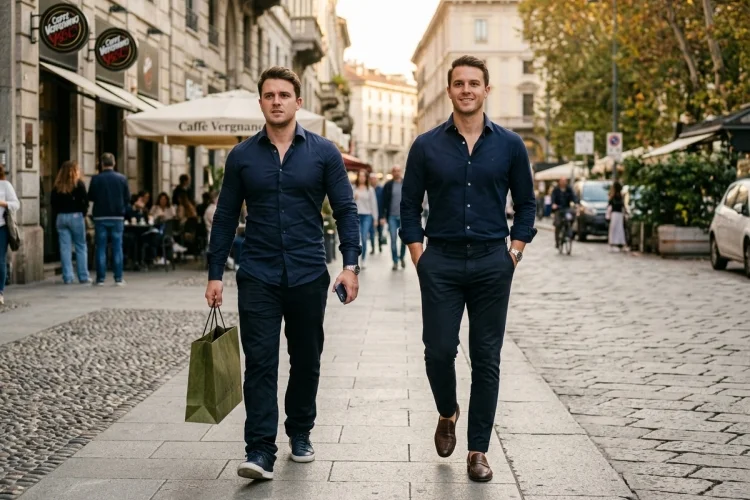
Imagine two people wearing similar outfits. One person is dressed in an expensive designer shirt that pulls across the chest and hangs awkwardly at the shoulders.
The other wears a simple, affordable shirt that sits neatly, allows comfortable movement, and creates balanced proportions. Which person is likely to look better dressed?
In many cases, the answer is the person wearing the better-fitting garment. Price can tell you something about a brand, material, construction, or exclusivity, but it cannot guarantee that a piece will suit your body.
Understanding why clothing fit matters more than clothing price can completely change how you shop. Instead of assuming expensive clothes automatically look better, you begin paying attention to shoulder placement, sleeve length, waist position, trouser break, comfort, and movement.
A well-fitting affordable garment can look polished and intentional. Meanwhile, even a beautifully made luxury piece may look disappointing when its proportions are wrong.
The goal is not to avoid expensive clothing, but to recognise that fit is what connects a garment to the person wearing it.
What Does Good Clothing Fit Actually Mean?
Good fit does not mean that every garment must sit tightly against the body. It means that the clothing creates its intended silhouette without unwanted pulling, bunching, sagging, or restriction.
An oversized jacket, for example, should look deliberately relaxed. The shoulders may extend beyond the natural shoulder line, but the sleeves and overall proportions should still appear balanced.
A fitted shirt should follow the body more closely, yet it should not strain around the buttons or restrict arm movement. Wide-leg trousers should have room through the legs while remaining secure at the waist.
Fit is therefore connected to design intention. A loose garment can fit properly, while a tight garment can fit badly. The important question is whether the piece hangs, moves, and functions as it was designed to.
Better Fit Creates a More Polished Appearance
The price tag is usually invisible once you leave the shop. Fit, however, is visible immediately.
Correct proportions create cleaner visual lines. A jacket that sits properly across the shoulders makes the upper body appear balanced. Trousers with the right length avoid excessive fabric collecting around the ankles.
Clothing also contributes to the impressions people form about identity, personality, status, and emotional state. Research into person perception suggests that dress is an important source of social information, even when observers know little else about the wearer.
This does not mean you must dress to please other people. It simply explains why an affordable outfit with thoughtful proportions may look more confident and intentional than an expensive outfit that appears uncomfortable or poorly sized.
Small fit improvements can make ordinary garments look surprisingly refined. Rolling sleeves neatly, adjusting a waistband, shortening trousers, or choosing the correct shirt length may have more visual impact than adding a designer logo.
Comfort and Movement Matter More Than Labels
Clothing is not only something people see. It is something you wear while walking, sitting, reaching, working, eating, and travelling.
When a garment is too tight, it may restrict movement or create pressure in uncomfortable areas. When it is too loose, it may slide, twist, catch on objects, or require constant adjustment.
One study examining tight trousers found that restrictive clothing could change trunk and pelvic movement during sitting. Although the research was limited in scope, it demonstrates that fit can affect more than appearance.
Research on protective clothing also identifies garment size and fit as important factors in comfort, utility, movement, and dexterity.
A premium garment that makes you uncomfortable will probably be worn less often. A reasonably priced piece that allows easy movement may become one of the most useful items in your wardrobe.
A Higher Price Cannot Guarantee the Right Proportions
People sometimes assume that spending more will solve every clothing problem. In reality, brands design garments around their own size charts, fit models, target markets, and preferred silhouettes.
You may wear one size in one shop and need a different size elsewhere. Even within the same brand, a slim-fit shirt and a relaxed-fit shirt may require different sizing decisions.
A higher price may reflect premium fabric, detailed construction, limited production, brand reputation, or specialised design.
Those features may be valuable, but they do not guarantee that the garment will match your shoulder width, torso length, hip shape, or personal comfort preferences.
The UK Consumer Detriment Survey 2024 identified wrong sizing, poor fit, and measurements that differed from descriptions among reported problems with purchased items. Within its analysis of item-related detriment, “wrong size/did not fit” represented 7% of the coded issues.
The lesson is simple: never assume that price or size labels can replace trying something on and evaluating how it actually feels.
How to Recognise a Good Fit
Different garments require different checks, but several signs are useful across most clothing categories.
1. Check the Shoulders and Upper Body
On a traditionally fitted shirt, coat, or blazer, the shoulder seam should usually sit near the edge of your natural shoulder. When it falls too far inward, the garment may feel tight. When it extends too far outward without being intentionally oversized, the piece may look droopy.
Look for pulling around buttons, the chest, and the upper back. Horizontal wrinkles often indicate that a garment is too tight, while large areas of collapsing fabric may suggest excess room.
You should be able to lift your arms, reach forward, and sit down without feeling trapped.
2. Examine the Waist, Hips, and Trouser Length
A waistband should remain secure without digging deeply into the body. Trousers should allow you to sit comfortably without strong pulling across the hips or upper thighs.
Check the fabric around the crotch and pockets. Excessive wrinkles, spreading pockets, or fabric lines pointing towards one area can signal a fit problem.
Trouser length depends on the intended style. Cropped trousers, full-length wide-leg designs, and formal tailored trousers should not all end at the same place. The hem should look deliberate rather than accidental.
Tailoring Can Be More Valuable Than Buying Expensive Clothes
Ready-to-wear clothing is designed to fit a broad range of customers, not one individual body. It is therefore normal for a garment to fit well in one area but require adjustment elsewhere.
Simple alterations can include shortening sleeves, hemming trousers, taking in a waist, replacing buttons, or adjusting the side seams. These changes can transform a basic garment into something that appears far more personal.
The Museum at FIT describes tailoring as one of the most important elements in the history of modern fashion. Tailoring has shaped both traditional suits and the wider development of structured clothing.
However, not every fit problem can be corrected easily. Altering shoulders, armholes, or complicated garment construction may be difficult and expensive. It is usually better to buy clothing that fits the largest or most structurally important area first, then adjust simpler sections.
Before purchasing a costly new item, consider whether altering something you already own would produce a better result.
Better Fit Can Improve Cost per Wear
The real value of clothing depends partly on how often you use it.
Imagine buying a $200 jacket that you wear five times because the sleeves feel awkward. Its cost per wear is $40. An $80 jacket worn 40 times costs only $2 per wear.
Fit influences this calculation because comfortable, versatile garments are easier to repeat. When clothes sit properly and work with your everyday activities, you are less likely to leave them untouched.
WRAP defines clothing longevity in terms of how long a textile product provides a useful service to its wearer. Its guidance also recognises that alterations can return garments to use by improving their fit or style.
This is why the cheapest garment is not always the best value, but neither is the most expensive one. The better purchase is often the item that fits, functions, and remains useful for longer.
How to Shop for Fit Instead of Price
Begin by ignoring the size label. Use it only as a starting point because sizing differs between brands and garment styles.
Try at least two nearby sizes when possible. Move naturally in the fitting room by sitting, walking, raising your arms, and bending slightly. A garment may look fine while you stand still but become uncomfortable during ordinary movement.
Wear appropriate underwear and bring the shoes you expect to use with the garment. Shoes can change the ideal length and overall proportions of trousers, skirts, and dresses.
Look at the garment from the front, back, and side. Photographs can reveal pulling, uneven hems, or excess fabric that may be difficult to notice in a mirror.
Finally, ask whether the item feels good now. Avoid buying uncomfortable clothing based only on a plan to lose weight, change your body, or become accustomed to the restriction.
Price, Quality, and Fit Should Work Together
Fit may matter more than price, but price is not completely irrelevant.
A well-fitting garment can still disappoint when its stitching fails, fabric loses shape, or colour fades quickly. Ideally, your clothing should combine suitable fit, reliable construction, comfortable materials, and a realistic price.
WRAP’s research on clothing durability highlights the importance of garment design and construction in extending clothing life and reducing the need for frequent replacement.
Start by checking fit because a poorly fitting piece is unlikely to become useful, regardless of its quality. Once the fit works, examine seams, fabric weight, buttons, zips, lining, stretch recovery, and care instructions.
The best purchase is not automatically the cheapest or most luxurious option. It is the garment that fits your body, supports your lifestyle, survives regular use, and remains within your budget.
Clothing fit matters more than clothing price because fit determines how a garment looks, feels, moves, and functions on your body. An expensive label cannot correct restrictive shoulders, an awkward waist, excessive fabric, or the wrong trouser length.
Affordable clothing can look polished when the proportions are right, while simple alterations can make existing pieces feel almost custom-made. Good fit may also encourage you to wear garments more frequently, improving their long-term value.
The next time you shop, spend less time looking at the price tag and more time checking the shoulders, waist, length, comfort, and freedom of movement.
Start by trying on one neglected item from your wardrobe and ask whether a small alteration could turn it into something you genuinely enjoy wearing.